
Social Conditioning: Desensitization to Human and Constitutional Rights Violations
Commentary

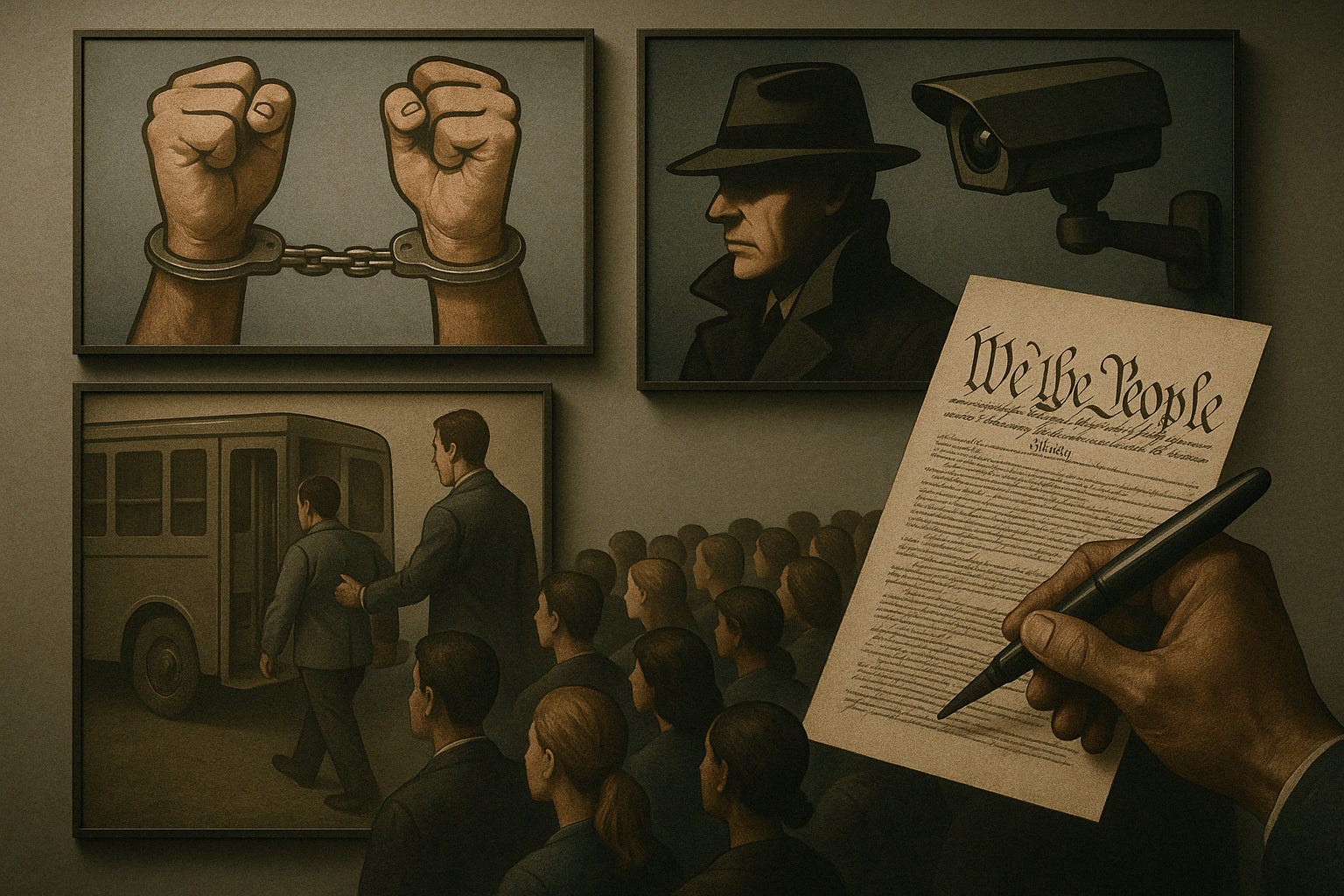
“When it becomes normal to deport citizens without a hearing, or spy without a warrant, the Constitution is already in crisis. The danger isn’t just in what’s happening — it’s in how quietly we’ve been trained to accept it.”
The erosion of human and constitutional rights doesn’t usually begin with tanks in the streets. It begins with a subtle decay of vigilance, a dulling of public outrage, and a steady conditioning of the population to accept the unacceptable. This is how societies unravel in plain sight. Not with a bang, but with a gradual normalization of injustice.
The Power of Normalization
What once would have sparked mass protest can, over time, become routine. Stop-and-frisk practices, the use of no-knock warrants, indefinite detentions, and now, even the deportation of American citizens without due process, have all become dangerously normalized. The mainstream media too often softens the narrative, framing these abuses as unfortunate necessities. When illegal actions are treated as legitimate tools of governance, the public stops recognizing them as violations.
This normalization is central to social conditioning. It turns the extraordinary into the mundane. It trains people to shrug rather than shout, to scroll past instead of standing up. Once it becomes "normal" to violate someone's rights in the name of security or convenience, the line between democracy and authoritarianism begins to blur.
