
From Domestication to Domination: How Animal Domestication Shaped Performative Cruelty in Politics and Society
Commentary

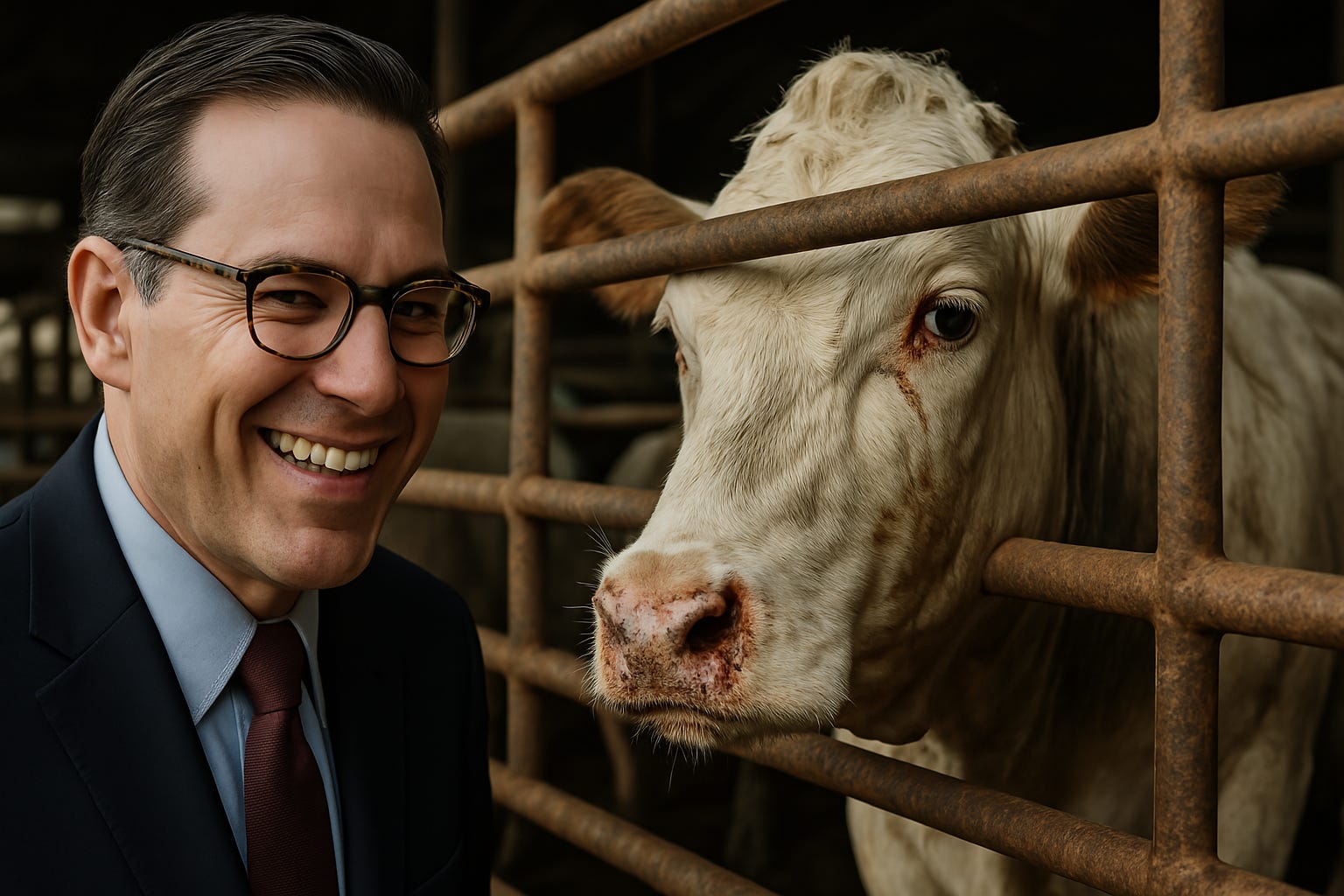
The domestication of animals is often framed as a triumph of human civilization—a turning point that enabled settled agriculture, economic expansion, and technological progress. But this moment in history also marked the beginning of a deep-seated cultural shift, one that normalized control, subjugation, and, ultimately, cruelty. The legacy of this shift still influences human behavior today, not just in the way we treat animals, but in the way we treat one another.
‘‘The domestication of animals normalized control, suffering, and subjugation—patterns that persist in factory farming and authoritarian politics. From industrial slaughter to state-sponsored cruelty, the spectacle of suffering reinforces power. Breaking this cycle requires rejecting systemic violence, whether against animals or marginalized humans.’’
Modern political systems, particularly authoritarian regimes, often employ cruelty as a spectacle—punishing, humiliating, and degrading opponents in public view to consolidate power. This practice, rooted in the need to establish control, has direct parallels to the ways in which humans have historically treated animals. From the breaking of wild horses to the industrialized suffering of factory farming, the framework of domination developed through animal domestication now permeates human institutions.
This article explores how the domestication of animals led to the normalization of performative cruelty, how it evolved into modern factory farming, and how these same dynamics now shape authoritarian politics. Understanding this historical trajectory is critical if we hope to dismantle these structures of oppression—toward both animals and humans alike.
The Birth of Domination: How Animal Domestication Changed Human Ethics
Animal domestication began over 10,000 years ago as humans transitioned from nomadic hunter-gatherers to settled agriculturalists. This shift was not just about survival—it was about control. Wild animals, once unpredictable and independent, were selectively bred, confined, and modified to fit human needs.
While domestication may have been necessary for early societies, it also established a troubling precedent. The ability to manipulate the lives, bodies, and reproductive cycles of animals reinforced the idea that suffering could be justified for the sake of efficiency, convenience, or power. Domesticated animals were mutilated (castration, branding, dehorning), restrained, and conditioned to obey human commands—practices that have persisted in the modern livestock industry.
This subjugation wasn’t limited to animals. As humans became comfortable with the idea of controlling and owning other beings, these patterns extended into human relationships. The same justifications used for animal exploitation—superiority, utility, and entitlement—were later used to justify slavery, caste systems, and other forms of human oppression.
David Nibert, in his book Animal Oppression and Human Violence, argues that domestication played a foundational role in the emergence of hierarchical social structures. He writes:
"The exploitation of domesticated animals provided a model for the oppression of humans, as societies began to view domination as a natural and acceptable way to organize life. Violence against animals normalized violence against marginalized groups."
Nibert’s analysis suggests that the very mindset that allowed humans to control and commodify animals laid the groundwork for the systems of oppression we see today. The ability to inflict pain without empathy, to justify suffering through economic or social necessity, did not remain confined to animal agriculture—it expanded into governance, labor exploitation, and warfare.
The Spectacle of Suffering: From Public Slaughter to Political Theater
Throughout history, cruelty has not only been a means of control but a form of entertainment. Roman gladiatorial games often included the public execution of animals and enslaved humans, reinforcing the idea that suffering could be both a display of power and a spectacle for public consumption.
Even outside of arenas, violence against animals was ritualized. Bullfights, bear-baiting, and public executions of animals (sometimes for alleged “crimes”) reinforced the belief that suffering could be justified if it served a larger social or cultural purpose. This logic was then applied to human societies, where public executions, torture, and corporal punishment became state-sanctioned spectacles.
The rise of authoritarianism has further weaponized cruelty as a performance. In many regimes, public displays of state power—such as leaked mugshots of political dissidents, highly publicized deportations, or the use of excessive force against protestors—mirror the theatrical cruelty of past animal spectacles.
These acts are not simply about punishment. They are designed to send a message. Just as public animal slaughter historically demonstrated human superiority, modern political cruelty demonstrates state power. The audience is expected to either cheer or look away, but never to intervene.
This performative aspect of cruelty is essential to its effectiveness. When authoritarian leaders engage in dehumanization, they do so with full knowledge that their supporters will see these actions not as moral failings, but as necessary spectacles reinforcing the natural order.
Factory Farming: The Ultimate Evolution of Performative Cruelty
Nowhere is the normalization of cruelty more apparent than in modern industrial agriculture. The factory farm system, which confines billions of animals in inhumane conditions each year, represents the culmination of the domestication mindset—the belief that suffering is irrelevant as long as it serves human ends.
Factory farming is built on efficiency, but that efficiency comes at the cost of animal autonomy, dignity, and welfare. Animals are forcibly impregnated, mutilated without anesthesia, and slaughtered at a fraction of their natural lifespan. Even basic movements, such as turning around or stretching one’s limbs, are denied in many industrial facilities.
The most striking parallel between factory farming and authoritarian cruelty is the effort to keep the suffering hidden. Just as oppressive regimes control the narrative around human rights abuses, the animal agriculture industry works aggressively to suppress footage from factory farms. Ag-gag laws criminalize whistleblowers who expose abuse, while advertising campaigns depict happy farm animals living in idyllic settings.
Yet when the truth is revealed—when people see videos of pigs screaming in gas chambers or cows collapsing from exhaustion—the reaction is often one of apathy or discomfort rather than outrage. This, too, is a product of domestication: centuries of conditioning have trained people to see animal suffering as either necessary or irrelevant.
This moral desensitization is precisely what allows cruelty to persist. If people are willing to ignore the suffering of animals they consume, they are more likely to overlook the suffering of marginalized groups within human society.
The Consequences of Institutionalized Cruelty
The parallels between animal exploitation and human oppression are not abstract—they have real-world consequences.
Desensitization to Suffering
When cruelty becomes routine, empathy declines. Studies show that slaughterhouse workers experience high rates of PTSD, depression, and emotional numbness. This desensitization can extend to other forms of violence.
Justification of Hierarchies
The logic that upholds animal exploitation—“they are beneath us, so it’s acceptable”—is the same logic that fuels racism, sexism, and class oppression. When society accepts cruelty toward one group, it becomes easier to justify it toward others.
Escalation of Violence
Throughout history, societies that normalize cruelty often escalate their use of violence. The same justifications used for the mistreatment of animals were once used to rationalize human slavery, colonization, and genocide.
Environmental and Social Collapse
Factory farming is not only morally indefensible but ecologically unsustainable. The mass breeding and slaughter of animals contribute to deforestation, water pollution, and climate change—creating crises that disproportionately impact the most vulnerable human populations.
Breaking the Cycle: Toward a More Ethical Future
If cruelty has been normalized through centuries of domestication, then dismantling it requires conscious effort.
Rejecting Performative Cruelty
Whether in politics or in food production, cruelty should not be accepted as an unavoidable reality. We must call out and challenge displays of suffering used to reinforce power.
Exposing the Hidden Atrocities
Just as journalists expose human rights abuses, activists must continue exposing the realities of factory farming. Transparency is the first step toward change.
Reframing Our Relationship with Animals
If domestication established the framework for oppression, then breaking free from it means rejecting the idea that animals are objects to be controlled. Ending factory farming is not just about animal rights—it’s about human ethics.
Conclusion
The domestication of animals introduced a mindset that placed power over compassion, control over coexistence. This mindset not only shaped the way humans treated animals but also influenced hierarchical structures that persist in human societies today. From the brutality of factory farming to the political theater of state-sponsored cruelty, we are still living with the consequences of this legacy.
But cycles of violence can be broken. By recognizing the deep connections between animal exploitation and authoritarian cruelty, we can begin dismantling both. Because the true measure of a society is not in its displays of power—but in its capacity for compassion.
Further Reading
For a deeper exploration of how animal domestication shaped human oppression, read Animal Oppression and Human Violence: Domesecration, Capitalism, and Global Conflict by David Nibert. It provides a comprehensive analysis of the historical and sociological impact of domestication on both animals and human societies.