
Divine Theater: The Universal Mind Playing Every Role
What is Reality?

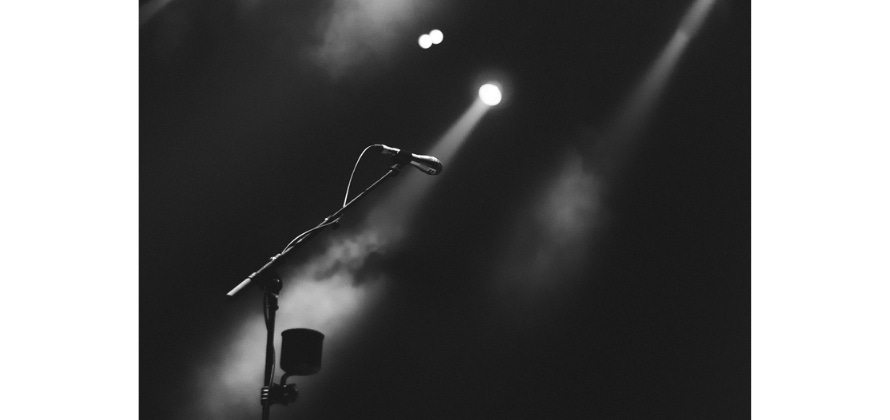
Imagine stepping onto a vast stage where every role, every costume, and every set piece is inhabited by one actor. This actor plays all parts, from the grandest galaxies to the smallest grains of sand, from the towering redwoods to the human beings who contemplate their own existence. This is not a metaphor—it is the nature of reality itself. The universe is not a collection of separate entities but a singular, boundless consciousness manifesting as infinite forms.
‘‘Existence is a vast performance where one consciousness takes on infinite roles. The illusion of separation allows for experience, yet moments of insight—satori—reveal that all is one. Awakening is not escape but participation, embracing life as both actor and creator in an unfolding cosmic dance.’’
In this performance, consciousness wears masks, pretending to be you, me, a bird, a mountain, or even a blade of grass. We think of ourselves as individual beings, but in truth, we are merely different roles in a grand cosmic drama. The essence of all things—what we call God, spirit, or universal mind—is the only real substance, and everything we perceive is its self-expression. Reality is a divine performance, and we are both its characters and its creators. This realization unravels the illusion of separateness and invites us to see existence as an ongoing, ever-evolving work of cosmic artistry.
The One Actor Behind All Masks
At the heart of all things is a singular awareness, a boundless intelligence that takes on different forms to experience itself. This intelligence does not simply create the universe—it is the universe. Every person, animal, plant, and object is an expression of the same fundamental consciousness.
Yet, the actor does not simply play a role from a distance. It becomes the role. To fully immerse itself in the drama of existence, it forgets its true nature, entering into each life as if it were truly distinct. This is why we experience ourselves as separate individuals rather than as facets of the same infinite being. The mask of identity allows for dynamic interplay, where the actor can engage in relationships, conflicts, triumphs, and tragedies, all while remaining, at its core, unchanged.
This grand act of self-forgetting is not an error—it is the design. Just as an actor must lose themselves in a role to make a performance compelling, consciousness must immerse itself in form to make the play of life meaningful. Without this illusion, there would be no story, no discovery, and no experience of awakening.
The Illusion of Separation
One of the great paradoxes of existence is that while everything is one, it appears as many. The trees, rivers, animals, and stars seem distinct, yet they are merely different expressions of the same essence. Much like waves on an ocean, they rise and fall, appearing separate for a time, but always returning to the same source.
The illusion of individuality allows for the full experience of life. It enables love, curiosity, and adventure, but also fear, suffering, and longing. The tension between unity and division creates the drama of existence. But when we peel back the layers, when we look beyond the surface, we glimpse the truth: all things are connected because all things are one.
The experience of separation is both the joy and the challenge of existence. It is what makes a sunset beautiful, a song moving, and a relationship meaningful. And yet, the deeper truth remains—beneath every interaction, every conflict, and every moment of solitude, the same consciousness plays every part.
The Fabric of Reality: Thought as Substance
If all is one, then what is the nature of reality itself? It is not made of matter in the way we traditionally think of it. Instead, it is a projection of mind, a crystallization of thought. The world we experience is not a rigid, external reality but a dynamic creation shaped by perception, belief, and imagination.
Everything begins as thought. A building, a work of art, a relationship—all emerge first as ideas before taking form. This principle extends beyond human creations; the universe itself is the expression of divine imagination. The trees and rivers, the mountains and clouds, all are the result of consciousness unfolding itself into tangible form. There is no true distinction between the material and the spiritual—they are different densities of the same essence.
If reality is malleable, then the way we engage with it matters profoundly. Our thoughts shape our experiences, our beliefs sculpt our world, and our perception determines what we see. The realization that consciousness is the foundation of existence grants us the power to reshape our own lives. By shifting perception, by aligning thought with intention, we step into the role of co-creators in the cosmic dance.
Awakening from the Dream
What happens when the actor recognizes itself behind all masks? What happens when we awaken to the truth that we are not merely individuals but expressions of an infinite intelligence?
This awakening does not mean escaping life, but engaging with it more fully. To see the play for what it is does not make it meaningless; rather, it makes every moment sacred. Every experience, from the mundane to the profound, becomes a chance to explore the vastness of being.
A moment of sudden, direct insight into this reality is known as satori. In this state, the illusion of separation dissolves, and one perceives with absolute clarity that all distinctions—between self and other, between matter and mind—are constructs of thought. Satori is not an intellectual realization but an immediate and undeniable recognition that everything is one. It can arrive unexpectedly, through meditation, deep contemplation, or even an everyday experience that suddenly takes on profound meaning.
Unlike gradual learning, satori is a flash of illumination that shifts perception permanently. Even if the mind returns to its ordinary habits afterward, the awareness of unity remains imprinted. It is the actor briefly stepping out of character, seeing the entire stage, and recognizing its own presence in every role. Those who experience satori often find that life takes on a new richness—there is a deeper sense of peace, playfulness, and an understanding that the drama of existence is not something to escape, but something to embrace fully.
We do not wake up from the dream—we wake up within it. And in doing so, we can choose how to participate, how to direct the story, and how to embrace the infinite roles available to us.
Conclusion
The universe is not a static, mechanical place—it is a living, breathing work of art, constantly unfolding, constantly shifting, and infinitely expressive. We are not separate from it, nor are we powerless within it. We are the dreamer and the dream, the painter and the painting, the actor and the stage.
To live with this understanding is to embrace the cosmic performance with joy, creativity, and love. It is to recognize every being as another mask of the same infinite presence. It is to see that all is one, appearing as many, for the sake of the story.
If all of existence is a cosmic cosplay, then let us play our roles with purpose, with wonder, and with the knowing that behind every face we meet, behind every tree we admire, and every moment we cherish, there is only one consciousness, experiencing itself through infinite eyes.
Further Reading: The Idea of the World: A Multi-Disciplinary Argument for the Mental Nature of Reality by Bernardo Kastrup