
Decolonization Isn’t Done: Why Shared Resources and People Power Are the Future
True liberation means more than flags and borders. To finish the work of decolonization, we must dismantle extractive systems and rebuild on the foundation of Resourceism and participatory democracy.

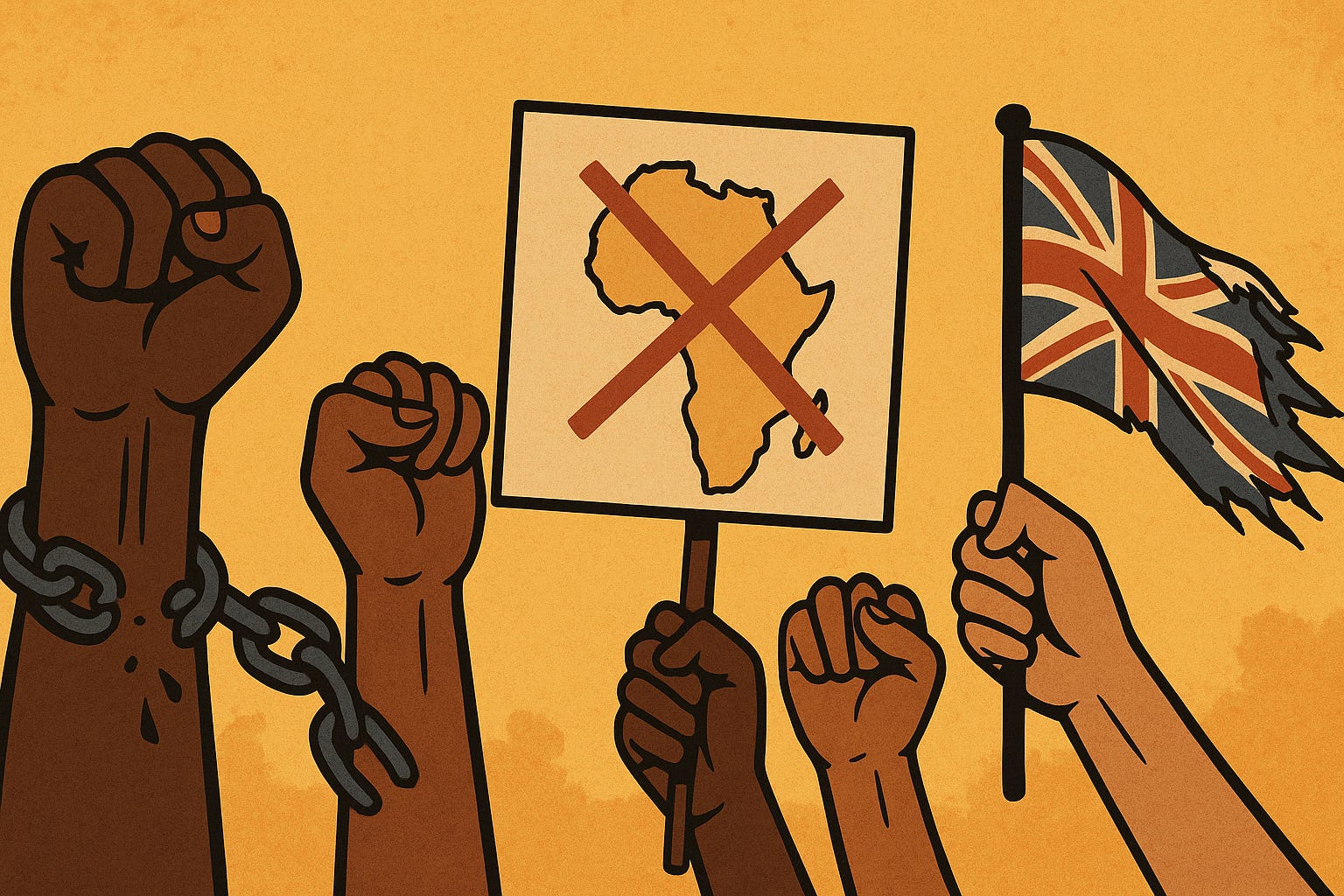
‘‘Unless we replace these systems with ones rooted in equity and ecology, we will be left with techno-feudalism or collapse.’’
Decolonization Isn’t Over. It’s Evolving.
We were told the job was done. That once the colonizers lowered their flags, justice had arrived. But today, the Global South is still being drained, not by gunships and governors, but by debt, data mining, and corporate extraction. Colonialism never disappeared. It just changed uniforms.
What we face now is a high-tech version of the same old empire, hidden behind trade agreements and digital platforms. War, climate collapse, and artificial intelligence are being used not to help the vulnerable, but to strengthen the grip of the powerful. The hard truth is this: past liberation movements were only the beginning. The real work lies ahead.
To truly decolonize, we need more than independence. We need a new foundation. One built on shared resources and collective decision-making. That’s Resourceism. And the engine that drives it is participatory democracy.
The Empire Didn’t Leave. It Rebranded.
Take a closer look. Ghana grows the cocoa, but Western corporations make the profits. India is politically free, yet its digital infrastructure runs on American servers. Lithium from South America powers luxury cars, while local communities face polluted water and broken land.
Colonialism never stopped. The World Bank and IMF still shape policy. Trade agreements funnel wealth northward. Multinational companies exploit supply chains that look a lot like old conquest routes. Western leaders speak of democracy, while propping up regimes and securing extraction rights.
We live with empire every day. Only now, it wears a suit and lands in private jets.
Resourceism: A New Way to Live
Colonialism, at its core, was about theft, of gold, spices, land, and labor. That theft didn’t end with independence. It just started calling itself "business."
Resourceism flips the script. It sees Earth’s gifts, food, water, energy, and land, not as private property, but as a shared inheritance. These are not commodities to be sold to the highest bidder. They are essentials that should never be up for auction.
Under Resourceism, communities control what they need to live. Water isn’t bought and sold. Food isn’t treated like stock. Energy isn’t trapped in markets. Distribution is local. Decisions are made by the people who live with the consequences.
This isn’t some abstract dream. Indigenous societies across the globe have lived this way for centuries. Their systems were dismantled to make way for profit. Now, as the climate cracks and economies fail, their old wisdom is our best guide forward.
Participatory Democracy: Power Without Permission
Winning back resources is just the first step. We also need to decide what to do with them, together.
Too many post-colonial governments copied the same old structures: power at the top, silence at the bottom. Presidents replaced viceroys. Parliaments replaced colonial councils. But the people remained locked out.
Participatory democracy takes a different path. It means decisions start from the ground up. It means local councils, worker-owned businesses, and public forums have real power. It doesn’t wait for permission. It organizes, debates, and builds.
This kind of democracy breaks down the walls that colonialism built. It dismantles top-heavy systems and replaces them with something more honest, something where everyone has a voice.
It’s already working. In Rojava, grassroots councils govern under siege. In Chiapas, Zapatistas run autonomous schools and clinics. Across the Global South, new cooperatives are proving that shared ownership works. These aren’t perfect models, but they’re real. And they’re growing.
Land Back: Repairing the First Wound
You can’t talk about decolonization without talking about land. Every empire began with land theft. Land is food, history, shelter, and soul. For Indigenous people, it’s identity.
Resourceism creates the logic for land return. If land can’t be owned in the traditional sense, then returning it isn’t a payout. It’s justice.
Participatory democracy makes that return meaningful. Land returned to a people, not just a person or a government, can be governed in ways that respect community, ecology, and tradition.
Movements like Land Back, legal rights for rivers, and restoration of tribal lands aren’t side issues. They’re at the heart of survival. They stitch closed a wound that capitalism keeps ripping open.
The New Colonization: Digital and Invisible
Land isn’t the only thing being colonized. Our minds are too. Through algorithms, surveillance, and media manipulation, colonial control is going digital.
Today, AI is being trained on biased data, built by corporations, and deployed without oversight. It is used to monitor protests, profile users, and extract behavioral data for profit. In many cases, AI becomes a tool of control rather than liberation.
To decolonize the digital world, we need democratic tech. That means open-source software, public data trusts, and communities deciding how their information is used. Tech should serve people, not track them.
Without this kind of control, AI will become the new empire.
There Is No Scarcity, Only Hoarding
Colonialism thrives on the myth of scarcity. It tells us there isn’t enough for everyone, so some must suffer. This story props up war, greed, and inequality.
But scarcity isn’t always real. The planet grows enough food. The sun and wind provide endless energy. What’s missing is fair access.
Resourceism changes the story. It shows that when we share what we have and plan together, there is plenty. Community gardens flourish. Solar panels power neighborhoods. Health care becomes a public good.
When decisions are made by communities and not CEOs, abundance becomes possible. Not luxury for a few, but enough for all.
We Are Out of Time
The urgency is real. The wars in Gaza, Ukraine, and Sudan aren’t isolated events. They are symptoms of a collapsing system struggling to hold on. As fascism rises and climate shocks hit harder, we are watching the empire panic.
We can’t afford to wait. Reforms and half-measures won’t save us. The same forces that once conquered land are now colonizing minds, water, and code.
Unless we replace these systems with ones rooted in equity and ecology, we will be left with techno-feudalism or collapse. The choice is still ours. But not for long.
This Movement Is Global
Across the world, people are pushing back. Indigenous communities are reclaiming land. Climate activists are shutting down pipelines. Mutual aid groups are feeding neighborhoods. People are waking up.
They are demanding justice, not charity. Autonomy, not assimilation. They want food sovereignty, reparations, and the right to govern their own futures.
This isn’t just resistance. It’s a vision. Resourceism and participatory democracy aren’t Western ideas. They’re the oldest ideas we have. The ones that empire tried to erase.
The next step is ours. We don’t need to manage the decline. We need to build what comes after.
Conclusion: Still Possible
Decolonization isn’t just a word. It’s a mission. A living one.
Will we allow billionaires, broken democracies, and AI systems to control a dying planet? Or will we return to what we already know?
The future is not yet lost. Share the land. Share the power. Share the tools of life. Let the people lead. Then, at last, the work of decolonization will be complete.
References
Walter Rodney, How Europe Underdeveloped Africa (1972)
Vandana Shiva, Earth Democracy: Justice, Sustainability, and Peace (2005)
Jason Hickel, The Divide: A Brief Guide to Global Inequality and its Solutions (2017)
United Nations Conference on Trade and Development (UNCTAD) reports on global extractive industries
"Land Back: A Yellowhead Institute Red Paper" (2019)
Commons Transition, Participatory Politics resources at www.commonstransition.org
World Economic Forum, reports on AI and digital colonialism (2023)
Further Reading
Arturo Escobar, Designs for the Pluriverse: Radical Interdependence, Autonomy, and the Making of Worlds
Naomi Klein, This Changes Everything: Capitalism vs. The Climate
Raúl Zibechi, Dispersing Power: Social Movements as Anti-State Forces
Linda Tuhiwai Smith, Decolonizing Methodologies: Research and Indigenous Peoples
Elinor Ostrom, Governing the Commons: The Evolution of Institutions for Collective Action