
Dear Robert Reich: Too Many Baskets, Not Enough Loaves
In capitalism, money is the tool of corruption

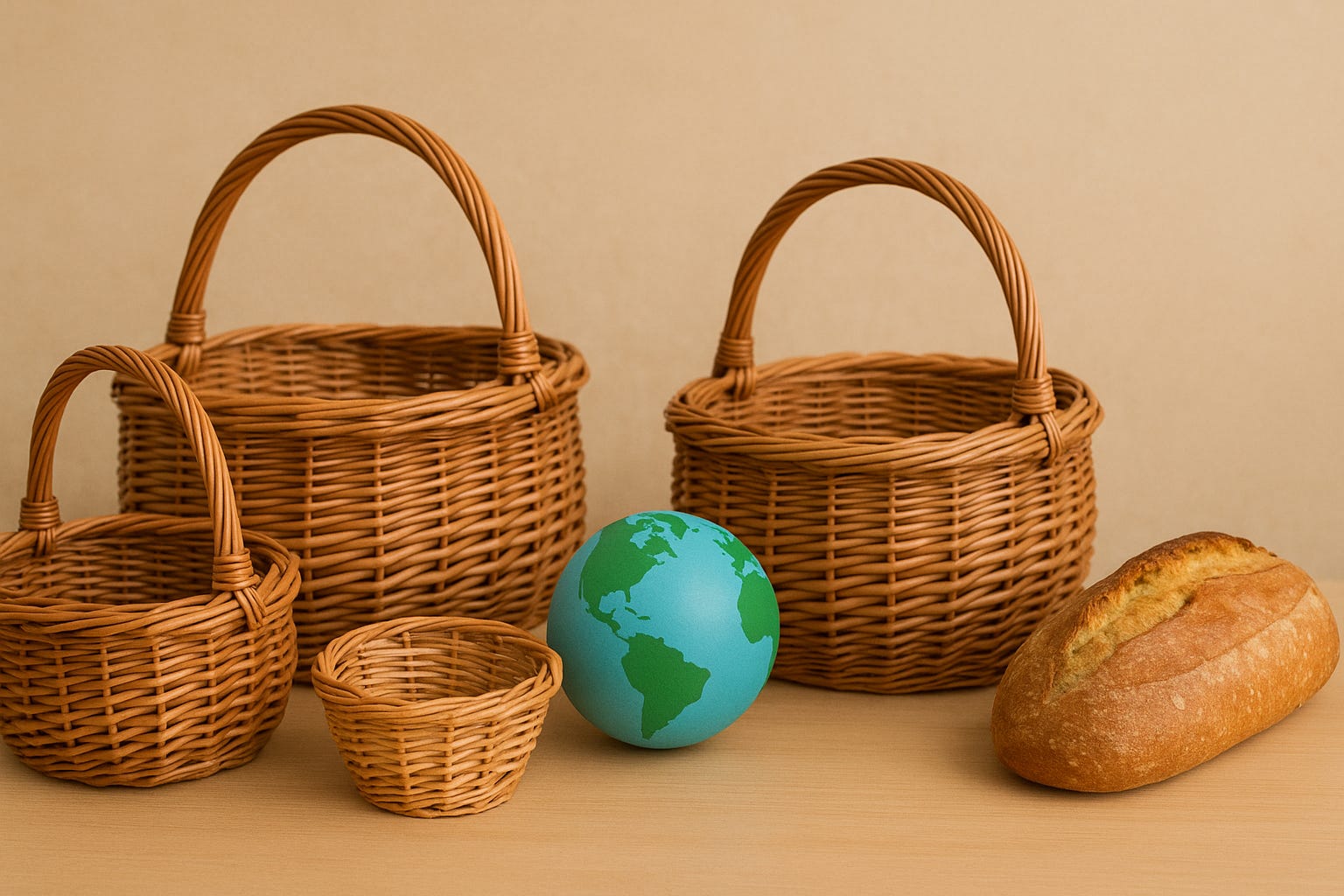
Money is not evil by itself, but under capitalism it becomes the tool of corruption. It buys power, silences justice, and reshapes society for the wealthy few. When hoarded, money stops serving people and starts controlling them. That is where the real danger begins.
Capitalism likes to boast that it is the greatest economic system the world has ever known. It claims to reward hard work, drive innovation, and lift people out of poverty. But there is a darker, more honest truth: capitalism is a rigged game. Not because people do not work hard or lack ingenuity, but because the loaves of bread are finite and the baskets are not. And in today's economy, the same loaves keep getting redistributed into fewer and fewer baskets, while most people are left holding empty ones.
We are told that capitalism runs on merit. That if you work hard, save your money, and play by the rules, you will earn your fair share. But that is a lie told by those who already have the loaves, who inherited their bakery and locked the doors behind them. Most of the wealth in the world is not created by individuals starting from scratch. It is passed down, hoarded, and protected. Meanwhile, the actual work of making bread, literally and figuratively, is done by the people with the smallest, emptiest baskets.
Put power, greed, and money in the same room, and corruption kicks down the door.
The most damaging part of capitalism is not just inequality. It is the way the system allows and even celebrates the hoarding of extreme wealth by individuals. When money piles up in a few hands, it distorts everything: politics, justice, opportunity, even morality. The billionaire class does not just control markets. It buys influence, rewrites laws, and reshapes society in its image. This kind of accumulation is not success. It is greed dressed up as virtue. And it validates one of the oldest warnings in human history: “For the love of money is the root of all evil” (1 Timothy 6:10, KJV). Capitalism turns that love into a doctrine, building systems not to meet needs but to generate profit, no matter the cost to people or the planet.
The Illusion of Infinite Growth
At the core of capitalism is the idea of infinite growth. More products, more profits, more markets. It sounds exciting until you realize we live on a finite planet. Resources run out. Ecosystems collapse. The climate doesn't care about corporate earnings. The earth cannot support endless loaves baked in factories powered by fossil fuels. And yet, capitalism depends on pretending it can.
That’s where the illusion becomes a delusion. Companies must grow each quarter. If they don’t, shareholders panic, layoffs begin, and “efficiency” becomes a euphemism for cutting jobs and benefits. The system rewards short-term profit over long-term wellbeing, even when the bakery is on fire and everyone’s breathing in the smoke.
The Basket Problem
Here’s the real issue: it’s not that we can’t produce enough loaves. We can. There’s enough food, housing, energy, and medicine for everyone. But the distribution system is broken. The baskets—the bank accounts, trusts, real estate portfolios, hedge funds—are held by a few, and they keep getting bigger. Billionaires don’t just have more wealth, they accumulate it faster than anyone else. The richer you are, the easier it is to get richer. That’s not a meritocracy. That’s a pyramid scheme.
Let’s be blunt: nobody needs a billion dollars. No one earns that much. It’s not compensation, it’s extraction. It’s the result of thousands, sometimes millions, of people working beneath them, making their profits possible. Capitalism celebrates the owner of the bakery while ignoring the migrant who harvested the wheat, the driver who delivered the flour, the cook who baked the bread, and the cashier who sells it for minimum wage with no healthcare.
Scarcity as Strategy
Capitalism doesn’t just allow inequality, it depends on it. Scarcity is part of the design. If everyone had what they needed—food, housing, education, safety—the entire labor system would shift. Workers would have more power. Employers would have to offer better wages, better conditions. But that’s not what the system wants.
So it manufactures scarcity. Housing prices are inflated by speculation. Food is wasted by the ton while children go hungry. Healthcare is rationed through insurance premiums. College saddles people with debt before they can even begin their adult lives. These aren’t accidents. These are features of capitalism, not bugs.
And when people push back? When workers strike, when communities organize, when movements demand better? The system calls it dangerous, radical, unrealistic. As if wanting a fair slice of bread is some kind of threat.
Introducing Resourceism
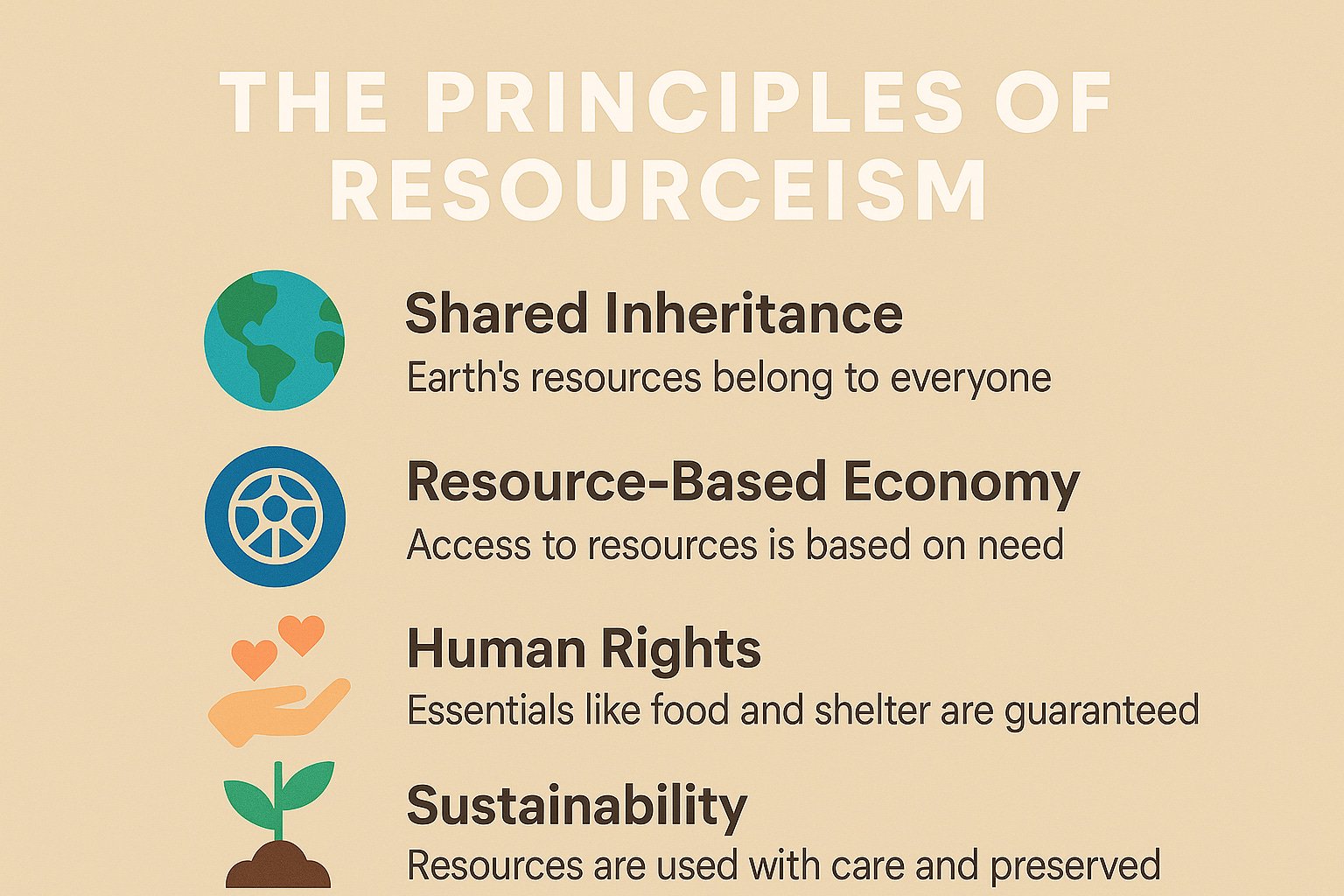
There is another way forward. It's called Resourceism, and it begins by asking a radically simple question: what if the earth's resources were treated not as commodities for sale, but as a shared inheritance? Instead of competing over money, we prioritize distributing resources based on need, sustainability, and stewardship.
According to Resourceism.com, this philosophy rejects both capitalism and authoritarian socialism. It proposes an ethical system where wealth is not measured in digits on a screen, but in real, tangible access to the necessities of life. Everyone would have guaranteed access to food, clean water, education, housing, and healthcare—because these are not luxuries. They are human rights.
What Resourceism Offers
A Resourceist system starts by recognizing that the planet belongs to all of us, not just the ones with the biggest baskets. It focuses on resource-based economics, not profit-based chaos. It organizes society around the fair, intelligent, and sustainable use of natural and technological resources.
Rather than hoarding, Resourceism encourages sharing. Rather than endless production and consumption, it emphasizes balance and regeneration. It does not rely on debt or credit. It does not force people to earn their right to exist. Instead, it builds a system where existence itself carries worth and dignity.
This is not utopian dreaming. It is practical moral accounting. When we stop wasting food, destroying ecosystems, and exploiting labor just to increase profit margins, we begin to restore sanity to the way we live.
Real Freedom, Not Market Freedom
Capitalism sells us the illusion of freedom through consumer choice. You can choose between different brands of cereal, between iPhones and Androids. But in real terms, most people can’t choose their hours, their jobs, or their homes. They can’t choose health, stability, or peace of mind.
Resourceism redefines freedom. Real freedom is the freedom to live without fear of hunger or homelessness. It’s the freedom to be educated, to rest, to be healthy, and to contribute meaningfully to society. It removes coercion from the equation and gives people back the time, space, and agency that capitalism strips away.
A Moral Reckoning
This is about more than economics. It’s a moral reckoning. Do we believe every human life is valuable? Do we believe that resources should be used to help as many as possible, not to make a few people obscenely rich? If so, capitalism cannot be defended. It’s failed the ethical test.
Resourceism passes that test. It does not just rearrange the baskets. It reimagines the bakery. It asks what kind of society we want to live in, not just how fast it can grow. It grounds that vision in shared values: compassion, equity, ecological respect, and common sense.
What Comes Next?
To move forward, we must challenge the old myths. We must stop seeing capitalism as the only option and start designing systems based on sustainability, cooperation, and justice. Resourceism is one such system. It deserves our attention.
This isn’t about ideology. It’s about survival. It’s about asking: what kind of world do we leave to the next generation? One with empty baskets and poisoned rivers? Or one where the loaves are shared, and no one goes hungry?
We can’t buy our way out of the problems capitalism created. But we can build a better world if we start by recognizing that the earth’s abundance belongs to all.
This article may contain affiliate links. As an Amazon Associate, we earn from qualifying purchases made through those links, at no extra cost to you. Thank you for supporting our work and helping us spread compassion.
Book Recommendations:
Post-Scarcity Economics by Paul Mason
Paul Mason offers a sharp look at how automation, climate change, and inequality are pushing capitalism past its limits. His vision of a post-capitalist society mirrors many tenets of Resourceism: cooperation, access, and sustainable abundance. It’s an essential companion to the ideas explored in this essay.
The Value of Everything: Making and Taking in the Global Economy by Mariana Mazzucato
In this provocative and essential read, economist Mariana Mazzucato challenges the myth of wealth creation under capitalism. She exposes how much of what is claimed to be “value” in the economy is actually extraction, and calls for a redefinition of economic purpose. This book is a must-read for anyone ready to rethink what a fair and productive economy should look like.
Afterword: A Future Rooted in Resourceism and Global Democracy
If there is a path forward for humanity, it lies in Resourceism paired with global participatory democracy. Together, these frameworks offer not only a way to meet everyone’s basic needs but also a way to restore dignity, justice, and sustainability to our fractured world.
Resourceism recognizes that Earth’s resources belong to all life, not just those with power or money. It shifts the focus from profit to provision, from hoarding to sharing, from extraction to regeneration. By aligning our economies with ecological reality and moral necessity, we move toward a system where no one is left behind.
But fair distribution requires fair governance. That is where global participatory democracy becomes essential. A just future must be one where people everywhere have a voice in the decisions that shape their lives and the planet. This means more than voting—it means active, inclusive, decentralized engagement from the ground up.
Together, Resourceism and global participatory democracy form a vision that is both practical and inspiring. It is a future where power flows from the people, and the Earth’s abundance is treated as a sacred trust, not a commodity. The time to build that world is now.
Agreed on virtually all points, for your thought piece on this topic is an outstanding one. If you are not currently a member of the Green Party, ideally you will consider joining the movement because your ideas are in alignment with ours. I will conclude by declaring, The Earth does not belong to us, we belong to the Earth.
Robert Reich? Is this article a response to what he said or posted?