
Chaos Is Not Control
Trump’s War, America’s Risk, and the Crumbling Fantasy of Authoritarian Strength

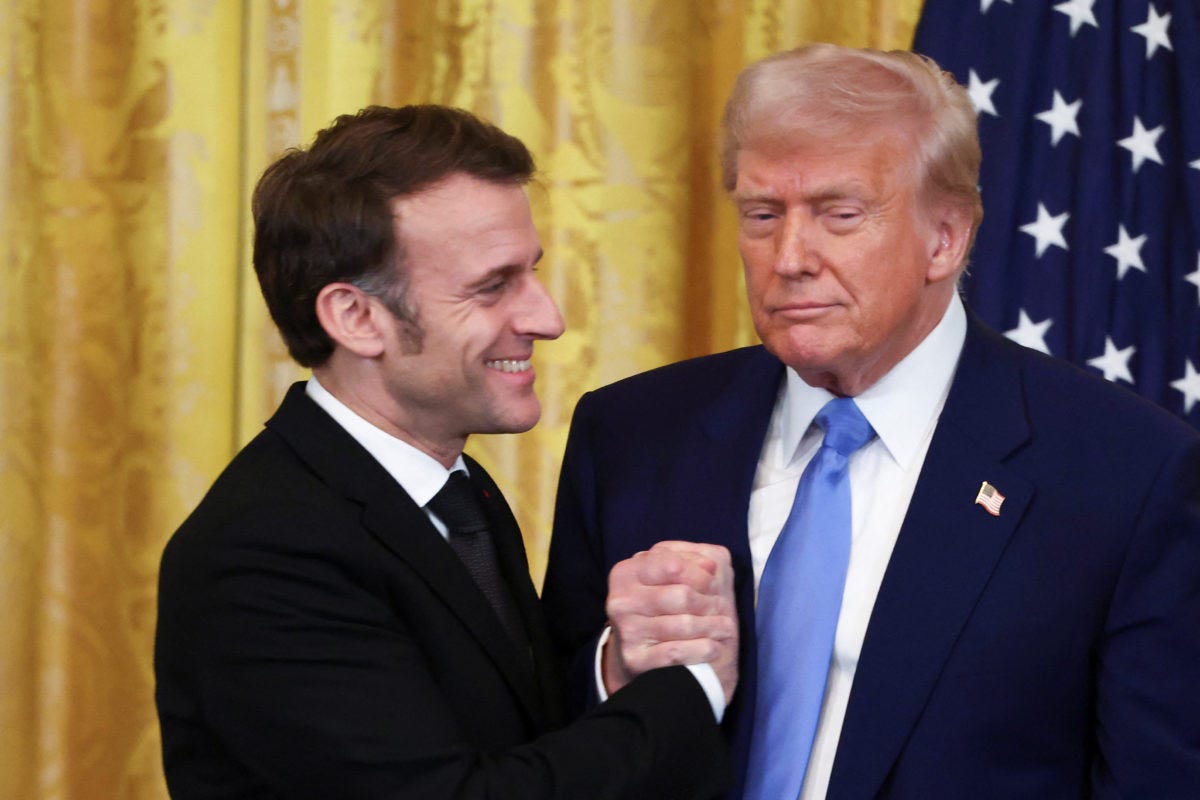
‘‘Trump has always sold the country a fantasy of force without cost, dominance without discipline, and disruption without consequence. The war with Iran is revealing what that fantasy looks like when it collides with reality.’’
Donald Trump’s political power has always depended on a trick of conversion. He turns disorder into theater, theater into grievance, grievance into loyalty, and loyalty into the appearance of strength. For years, that conversion has worked often enough to let him survive what would have broken ordinary politicians. Chaos, in Trump’s hands, becomes proof of vitality. Cruelty becomes proof of toughness. Isolation becomes proof of independence. Even failure can be repackaged as persecution.
But there is a limit to that magic.
The danger for strongman politics is not simply scandal, or even lawlessness. It is exposure. It is the moment when the performance of command collides with facts that cannot be massaged, delayed, or shouted down. It is the moment when the spectacle still blares, but the underlying reality grows too costly, too visible, and too contradictory to sustain the myth. That is the problem confronting Trump now as the war with Iran deepens, allies recoil, oil markets convulse, and administration officials face growing questions about the conflict’s clarity, transparency, and strategic coherence. Reuters reported on March 17 that Trump publicly attacked NATO allies for refusing to support a U.S. effort tied to securing the Strait of Hormuz, and AP and Reuters have both reported widening regional and economic fallout from the war.
The central issue is not whether Trump can still dominate a camera. He can. It is not whether he can still flood the zone with propaganda. He can. The issue is whether he can still make confusion look like control.
That is a harder sell.
War is the great enemy of slogan politics. Strongmen thrive on simplified stories. They need the public to experience events as a morality play with one hero, one villain, and one inevitable outcome. Trump excels at this form. He wraps escalation in the language of decisive manhood and dresses improvisation as strength. But war produces consequences that do not care about branding. It produces supply shocks, allied resistance, intelligence disputes, body counts, market panic, and strategic drift. AP reported on March 18 that the conflict, which began on February 28, had spread into attacks on energy infrastructure across the region, pushed Brent crude above $108 a barrel, and contributed to more than 1,300 deaths in Iran, with additional casualties in Israel and Lebanon. Reuters reported the same day that Tehran warned Gulf energy installations to evacuate after strikes on Iranian gas facilities, helping drive Brent close to $110 and intensifying fears of broader disruption.
This is where rhetoric starts to fail. A man can posture over a podium. He cannot command the price of oil by force of ego. He cannot bully allies into sharing ownership of a war they did not choose. He cannot simply declare complexity out of existence when his own intelligence leadership is testifying that Iran’s government remains intact, even if badly degraded. Reuters reported on March 18 that Director of National Intelligence Tulsi Gabbard told the Senate Intelligence Committee that Iran’s government had been significantly weakened but remained functional and still posed a threat to U.S. and allied interests. The same Reuters report said lawmakers raised bipartisan concerns about transparency, cost, civilian impact, and the war’s effect on energy and financial markets.
That hearing matters because authoritarian politics depend on narrative discipline. The leader must appear not only forceful but uniquely able to define reality. Under that model, disagreement is not ordinary dissent; it is betrayal. Complexity is not a normal feature of policy; it is a weakness. But once official testimony, allied conduct, and economic indicators begin to diverge from presidential swagger, the model weakens. The problem for Trump is not that everyone has suddenly become brave. It is that reality has become harder to choreograph. Reuters’ Senate hearing report makes plain that even as the administration insists on strategic success, core questions about rationale, impact, and consequence remain live and contested.
There is also a deeper strategic failure on display. Trump’s political identity has long depended on projecting himself as the man who alone can compel obedience, punish disloyalty, and bend institutions to his will. Yet this war has exposed the limits of that posture abroad. Reuters reported that Trump called NATO’s refusal to assist “a very foolish mistake” and said the United States would remember which countries declined to help. But the same report makes clear that several allies still refused to participate in the Hormuz effort he wanted. Europe’s refusal was not a symbolic slight. It was a reminder that international actors are not cable-news props. They calculate interests, costs, legality, and public opinion.
That matters because Trump’s power has always been strongest in environments where fear, dependency, and media saturation allow him to dominate weaker actors. But allies are not interns, and military coalitions are not applause lines. When governments hesitate, refuse, or publicly distance themselves, the strongman image begins to lose its luster. Not because he becomes less dangerous, but because he becomes more visibly limited. Reuters reported on March 18 that European leaders framed the Iran conflict as “not our war,” stressed that they had not been consulted, and favored de-escalation over direct involvement in Trump’s approach.
This is one reason humiliation matters so much in authoritarian politics. Liberal democracies, at their best, are built to survive embarrassment. They assume leaders are partial, fallible, and replaceable. Strongman systems do not. They rely on a cultivated aura of inevitability. The ruler must seem larger than institutions and more decisive than process. His followers do not merely support him. They inhabit the fantasy that his dominance is a fact of nature. Once that fantasy begins to crack, the movement does not necessarily collapse, but it often becomes more paranoid, more punitive, and more unstable.
That is why Americans should resist the temptation to read the current moment as a simple vindication. Trump is not finished because events are going badly. Authoritarian projects are rarely undone by one failure, however costly. They endure through repetition, normalization, and institutional cowardice. They survive because too many elites keep treating lawlessness as a style problem and brutality as a messaging problem. They survive because oligarchic interests, partisan media, and frightened officials continue to bet that accommodating the strongman is safer than confronting him.
Nor is the danger confined to foreign policy. The same habits that produce reckless escalation abroad also corrode democratic life at home. Rule by spectacle trains the public to confuse volume with strength. It teaches citizens to treat domination as competence and permanent emergency as normal governance. It replaces deliberation with emotional mobilization and asks institutions to adapt themselves to the leader’s appetites. War, especially a chaotic and expanding war, magnifies all of it. It becomes a solvent poured over truth, accountability, and civic trust.
So the real subject is larger than Donald Trump’s embarrassment, though there is plenty of that. The real subject is whether the American public, the press, and the political class will finally stop mistaking theatrical aggression for command. Trump has always sold the country a fantasy of force without cost, dominance without discipline, and disruption without consequence. The current conflict is showing, in bloody and expensive terms, what that fantasy looks like when it meets the world. AP reported that the war has widened into attacks on energy infrastructure and regional targets, while Reuters reported that U.S. intelligence leadership now openly acknowledges that Iran’s regime remains in place despite the campaign’s severe degradation. Those facts do not describe mastery. They describe a violent, unstable reality that refuses Trump’s preferred script.
If there is a lesson here, it is not that strongmen always fall quickly. Often they do not. It is that they become most vulnerable when the image on which they depend can no longer contain the facts. Trump still has propaganda, loyalists, money, and a media ecosystem built to convert every reversal into grievance. He still has a party that fears him more than it fears national humiliation. He still has millions of followers for whom his anger feels like identity. None of that should be underestimated.
But spectacle is not sovereignty. Noise is not a strategy. Chaos is not control.
And when the costs are this visible, the old magic starts to fail.
Context: Trump’s failed strong-arming of allies on Iran shows that pressure is losing its effect
Before you go, tap the ❤️ and re-stack this post so we can put it in front of as many readers as possible.
I know some may not want to commit to a paid subscription, but if you’d like to support my work, you can always buy me a coffee on Ko-fi. Your contribution helps sustain independent writing rooted in consciousness, compassion, and social renewal. Every bit of support truly makes a difference.
"The real subject is whether the American public, the press, and the political class will finally stop mistaking theatrical aggression for command." I wonder, fear and wait.
“.. the underlying reality grows too costly, too visible, and too contradictory to sustain the myth.”
That’s it — DJT is all myth, hasn’t properly earned his lofty position, and the PAIN America & the world are increasingly feeling … will soon all be laid at his doorstep..
BLAME GAME:
— Biden & Obama didn’t start this war & its consequences.
— Dems didn’t decide to ‘go to war’ based on specious claims.
— allies didn’t ‘drift away’ because of little diplomatic tiffs.
No, Trump treated these entities with disrespect AND the situation with disregard for reality.
— any leaders sending their own soldiers into mortal combat need verifiable evidence that this course is right, all other diplomatic options tried & failed & putting their soldier’s lives in the line is warranted … plus their fellow congress people are largely in agreement : none of this happened.
Now Trump & his enablers / followers will learn the hard way, dragging the rest of the world along with them. To really learn this lesson they all need to feel this coming pain — altho granted, much less pain than what is being unfairly inflicted on others in the combat zones & neighboring areas.
* Wasn’t it nice that the Venezuelan baseball team won over the American team today?
—Venezuelans really need that joyous affirmation! 💥🔅🌈🏆