
Another Day
A Life Marked for Removal Inside America’s ICE Detention Camps

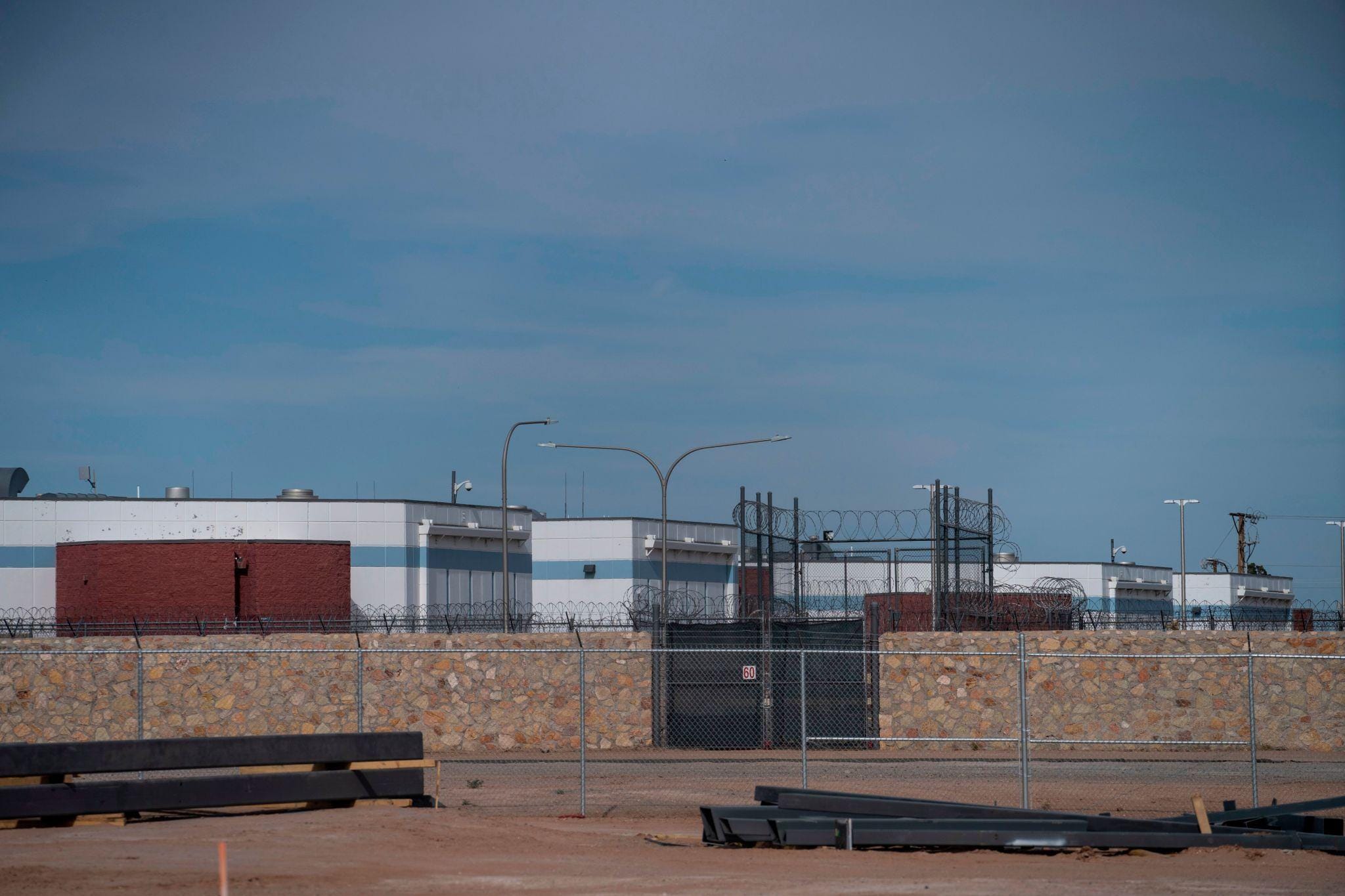
“History does not accept ‘we didn’t know’ once the evidence is public.”
Morning does not arrive here. It is announced.
The lights snap on before dawn, harsh and immediate, washing the room in white. A guard’s voice follows, sharp and practiced, calling for the count. Numbers instead of names. Movement instead of choice. Somewhere along the row of metal bunks, a woman coughs, another whispers a prayer in a language the guards do not speak. The person at the center of this story is not a criminal. She has not been convicted of anything. She is here because the government decided that speed was safer than fairness, and removal easier than due process. This is not chaos. This is procedure. This is what another day looks like inside an ICE deportation camp in America.
Her name is Ana.
She swings her legs off the bunk and feels the cold concrete through the thin soles of her shoes. The plastic bracelet on her wrist catches the light. An alien number. She rubs it absentmindedly, as if friction might erase it. Around her, women line up in silence. Some have learned not to look up. Others look too closely, as if memorizing the room in case it is the last time they see it.
The count takes less than a minute. The guards are efficient. Efficiency matters here. Efficiency is the point.
Breakfast is served in a room that smells of disinfectant and overcooked meat. Trays slide down the counter. Powdered eggs. A pale sausage. Milk in a carton that sometimes tastes wrong. Ana eats because she knows she needs strength, not because she is hungry. Across from her, Maribel stares at her tray without touching it.
“They gave me papers last night,” Maribel says quietly.
Ana looks up. “What kind of papers?”
“Removal,” Maribel replies. “They say if I sign, I can be gone in two weeks. If I don’t, they keep me here while they decide anyway.”
She laughs once, sharp and tired. “They call it a choice.”
This is a non-fiction account of real conditions inside one concentration camp:
Exclusive: Detention Center Captives Are Throwing Lotion Bottles Wrapped With Notes to Organizers Outside Otay Mesa Facility
“For 280 days we haven’t eaten a single piece of fruit, banana, apple, orange, or anything fresh,” an Otay Mesa captive communicated through handwritten note. “We are all in one big room with no doors or windows. We can’t see any grass or trees. We are all constantly sick.”
This is how the days move now. Not toward waiting, but toward narrowing. Toward deadlines that arrive faster than understanding. Toward signatures demanded in rooms that smell like toner and fear.
After breakfast, an officer reads names from a clipboard. People gather their things quickly. A sweater. A folder of documents. A photograph folded until the edges are soft. Some will go to court today. Some will be told they missed a deadline they never knew existed. Some will be asked to sign forms written in legal English, summarized too quickly in Spanish, with consequences that stretch across borders and lifetimes.
Ana’s name is called.
The interview room is small and cold. A man sits behind a desk, typing as she speaks. An interpreter’s voice crackles through a speaker. Ana explains again why she fled. The threats. The gun. The note slid under her door. The police who shrugged and said they could not protect everyone.
“You entered without authorization,” the man says without looking up. “You are subject to expedited removal.”
“I asked for asylum,” Ana says. “They told me to ask.”
“That was a credible fear interview,” he replies. “This is different.”
She is handed papers. One signature would mean agreeing to deportation. Another box would request review, delay, uncertainty. She thinks of her daughter. Of the cost of phone calls. Of women who signed and were gone within days, woken in the night, shackled, escorted onto planes.
“I need a lawyer,” Ana says.
The man exhales. “You can request one, but there is no guarantee. Your hearing could be soon.”
Soon is not a promise. It is pressure.
Back in the dorm, tension hums louder than the lights. Women compare paperwork. Hearing dates that make no sense. Notices stamped with yesterday’s time. A woman sobs because her hearing is tomorrow and her lawyer cannot be reached. Another stares at the wall, silent, because she has already been ordered removed and is waiting for transport.
This is not endless detention. This is compressed fate.
Yard time comes in the afternoon. The word suggests grass and space. Here, it is concrete under open sky, ringed with fencing and wire. The sun burns. Shadows fall in a grid. Ana walks slow circles with Maribel.
“They want it fast,” Maribel says. “So fast you cannot think.”
“They want it quiet,” Ana replies.
Medical passes through later, pills handed out through a window. No exams. No questions. Ana’s stomach cramps again. She considers asking for help, then remembers how easily names move from one list to another. Complaints become delays. Delays become discipline.
She is called for a phone call just before evening count. Her mother answers, then her daughter.
“Mami, are you coming home?” her daughter asks.
Ana closes her eyes. “I don’t know yet, my love.”
“Abuela says you might come soon.”
“Yes,” Ana says softly. “Soon.”
She does not say where.
Night settles without darkness. The lights dim but never turn off. The final count is faster than the first. The guards want to finish their shift. Paperwork moves even when people do not. Somewhere in the building, a woman is being prepared for transport. She will leave before dawn, escorted, processed, removed.
Ana lies on her bunk, papers folded under her pillow. She thinks about the word removal, how clean it sounds. Like deleting a file. Like clearing a space.
She whispers to herself, “I am still here.”
Morning will come again, announced and unavoidable. Another day. Another decision pushed closer to the edge.
Afterword: If You Know, You Must Speak
This story does not stand alone. It exists inside a country where these detention and deportation systems are visible enough to be known and distant enough to be ignored.
In her February 7, 2026 letter, historian Heather Cox Richardson recalls a moment after the liberation of the Ohrdruf concentration camp, when the town’s mayor took his own life rather than face what had happened nearby. The lesson was never that one man alone was responsible. The lesson was that such systems do not operate in secrecy. They operate in proximity. They operate while neighbors live ordinary lives and tell themselves they do not know enough to intervene.
That warning applies now.
ICE detention and deportation centers are not abstractions. They sit near highways and airports, outside small towns and along industrial roads. People are confined, pressured to sign away their rights, and removed from the country at speed. Many have no criminal convictions. Many asked for asylum legally. Many never receive a hearing that meets even a minimal standard of justice.
And many Americans know this.
They know because journalists have reported it.
They know because lawyers and doctors have testified to it.
They know because historians have named the pattern.
They know because these facilities require permits, contracts, staffing, and silence.
The danger is not only what happens inside the camps. The danger is the sentence repeated outside them: we didn’t know. History does not accept that defense once the evidence is public.
If you know, you must speak.
Because systems that normalize rapid detention and deportation do not remain confined to immigrants. Once due process becomes optional, once speed replaces deliberation, once whole groups are defined as removable, the category expands. Protesters become disruptors. Journalists become threats. Political opponents become risks to order.
The infrastructure is already built.
The language is already softened.
The exceptions are already written.
Immigrants are not the end of this story. They are the beginning of the test.
And the question history will ask is not whether these camps existed, but whether those who lived nearby, morally and geographically, chose to speak while there was still time.
I know some may not want to commit to a paid subscription, but if you’d like to support my work, you can always buy me a coffee on Ko-fi. Your contribution helps sustain independent writing rooted in consciousness, compassion, and social renewal. Every bit of support truly makes a difference.
The hypocrisy of Trump's party knows no bounds; here is what the Bible says. (Gemini AI)...
"Bible verses about welcoming the stranger include Matthew 25:35 (“I was a stranger and you welcomed me”), Hebrews 13:2 (not forgetting to show hospitality, as it may involve angels), and Leviticus 19:34 (loving the stranger as oneself). These verses emphasize kindness, compassion, and treating foreigners with the same respect as citizens."
Humans not even treated as insects.